Any content you receive is for information purposes only. Always conduct your own research. *Sponsored
Krypton Street Takes a Hard Look at Polyrizon (Nasdaq: PLRZ) Before the First Patient Is Enrolled
Full Coverage Goes Live This Morning—Tuesday, July 14, 2026
Get the Next Update the Second We Send It — Real-Time Phone Alerts That Beat Email Every Time Read the Full PLRZ Breakdown While It’s Still Early. July 14, 2026 Dear Reader, Yesterday, our featured profile tapped $1.08, an approximate 20% move from Friday's $0.90 range. This morning, our focus turns to Polyrizon Ltd. (Nasdaq: PLRZ) — the name at the center of today's coverage. Two regulatory events tend to move the needle more than almost anything else in early-stage medical device development: completing a full biocompatibility program and receiving central IRB approval. Polyrizon reached both within approximately two weeks of each other in June and July 2026. That doesn't happen by accident. On July 2, 2026, Polyrizon announced successful results from its full ISO 10993 biocompatibility evaluation for NASARIX™, its allergy blocker nasal spray. Every required biological safety endpoint — cytotoxicity, sensitization, irritation, material-mediated pyrogenicity, and acute systemic toxicity — met its predetermined acceptance criteria. The evaluation was conducted under both FDA and EU regulatory frameworks. Less than two weeks before that, BRANY Institutional Review Board granted central IRB approval for the NASARIX™ clinical trial protocol, valid through June 17, 2027. BRANY reviewed the protocol, consent forms, quality-of-life assessments, and electronic diary tools. That approval opens a defined 12-month window for site activation and enrollment. ISO 10993 clearance confirms the device materials pose no biological risk to human subjects — without it, no human study can begin. IRB approval confirms the ethical and procedural framework is sound. Both are required before the first patient is enrolled. PLRZ now has both. The company also carries fewer than 1.5M shares in its public float, and entered 2026 with $17.5M in cash and a debt-free balance sheet. Those numbers don't get less relevant as the trial gets closer — they get more relevant. Krypton Street's full analysis is below. 
Why Standard Allergy Treatments Keep Falling Short
The allergic rhinitis treatment market is well-established — and still inadequate for a substantial portion of sufferers. Antihistamines block the histamine receptor response, which means they intervene after allergen exposure has already triggered the immune cascade. Corticosteroid nasal sprays reduce mucosal inflammation, but again require daily use and work best as preventive measures rather than exposure blockers. According to IMARC Group market data, the allergic rhinitis market continues to grow despite these constraints — reflecting unmet need rather than patient satisfaction. Allergen immunotherapy is the only current approach that modifies the underlying immune response, but it requires years of treatment. Healio reported in April 2026 that pollen seasons in North America are now starting up to 20 days earlier than in the 1990s and lasting longer. Clinicians are seeing more patients with previously mild symptoms now requiring consistent therapy. The demand side of this market is expanding; the treatment side has not kept pace. The intranasal dr-ug delivery market, tracked by Precedence Research, is expanding as a category. But even within that growth, the standard framing remains pharmacological: modify a pathway, suppress a response. None of the existing approaches prevent the initial allergen-epithelium contact — that gap is what the NASARIX™ mechanism is built around. The Logic of a Physical Barrier
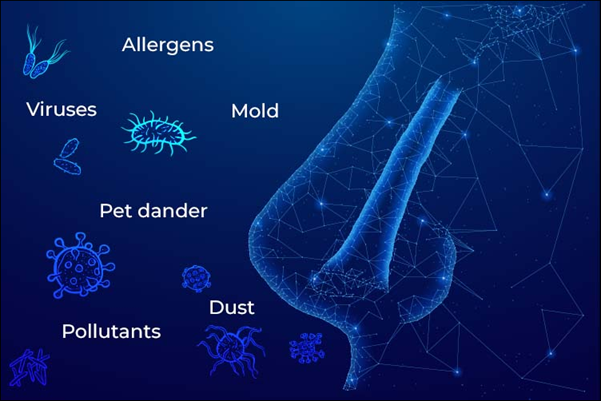
Polyrizon's thesis begins at the point of entry. NASARIX™ — built on the C&C (Capture and Contain) hydrogel platform — is designed to coat the nasal cavity with a thin mucoadhesive layer that physically traps airborne allergens before they reach nasal epithelial tissue. The formulation uses naturally occurring building blocks and adheres to nasal mucosa, extending its protective effect for the duration of barrier retention. The key distinction is mechanistic. Rather than interrupting a signaling pathway after the fact, NASARIX™ attempts to prevent the initial allergen-epithelium contact that triggers the inflammatory cascade. If the allergen can't reach the nasal mucosa, the cascade doesn't start. This is a physical intervention, not a pharmacological one — which is what gives it medical device classification under FDA frameworks. That classification carries real implications for the development timeline. Medical device development under the de novo FDA pathway requires clinical evidence of safety and performance — but not the same multi-phase trial structure as a New Dr-ug Application. Demonstrate biocompatibility, device performance, and clinical benefit in a defined indication. That's the bar, and the first item on that list is already done. Walking Through the Timeline
The PLRZ development timeline over the past seven months follows a logical progression. In December 2025, Polyrizon completed a GMP manufacturing upscaling milestone — transitioning from lab-scale to larger controlled production batches, validating formulation quality at commercial-preparation volumes. That batch supplies clinical trial material. In May 2026, the first U.S. clinical site was secured. Three weeks later, two additional sites were announced, bringing the total to three major contracted centers. In parallel, a European human performance study was announced in June to characterize nasal residence time for NASARIX™ — directly supporting FDA regulatory submissions. A U.S. patent publication for the Trap & Target mucoadhesive dr-ug delivery platform came June 17, and a European counterpart followed June 10. Both filings extend PLRZ's IP coverage across two distinct product categories built off one core platform — the barrier application and the dr-ug delivery application. The Regulatory and Clinical Pathway Ahead
With biocompatibility complete and IRB approved, the next step is site activation and patient enrollment. Individual clinical sites obtain site-specific IRB approvals before study-related activities begin — a sequential process that follows central approval. The European nasal residence time study adds a parallel data stream: results will inform dosing assumptions and duration-of-use labeling that matter for both the regulatory package and eventual commercial positioning. The clinical study — comparing NASARIX™ against saline spray in seasonal allergic rhinitis patients — is designed to generate safety and efficacy data supporting a potential de novo FDA submission. With non-dr-ug classification, the evidentiary path is more targeted than a traditional NDA: biocompatibility is already done, what remains is device performance and clinical benefit. The capital base supports this timeline. $17.5M in cash, no debt as of year-end 2025, supplemented by a $3.5M registered direct placement in April 2026. The float of under 1.5M shares creates a structural dynamic where any increase in attention arrives against a limited supply of available shares. Take A Look At PLRZ This Morning—Tuesday, July 14, 2026… Here’s 7 Reasons Why…
1. Float Constraint: With a public float of under 1.5M shares, PLRZ has one of the smallest share structures in its peer group — meaning the available supply of shares in the open market is very limited. 2. Capital Discipline: PLRZ entered 2026 with $17.5M in cash, zero debt — a balance sheet structure that provides runway without near-term financing pressure, particularly relevant when enrollment is weeks away. 3. Biocompatibility Complete: Every required biological safety test under the ISO 10993 biocompatibility program passed — cytotoxicity, sensitization, irritation, pyrogenicity, and acute systemic toxicity — completing the non-clinical safety package required before first-in-human testing. 4. Ethics Approved: BRANY IRB approval means an independent review board confirmed that the study protocol and participant protections meet applicable ethical standards — a prerequisite for enrolling any human participants. 5. Clinical Infrastructure: Three major U.S. sites — specifically those expected to provide the highest patient enrollment — are already under contract for the multi-center NASARIX™ trial. That is operational infrastructure, not a plan. 6. Expanding IP: Both U.S. and European patent publications for the Trap & Target mucoadhesive platform are active, extending IP protection across two major regulated markets for both the barrier and dr-ug delivery applications. 7. Device Pathway: NASARIX™'s classification as a medical device rather than a pharmaceutical creates a structurally different regulatory timeline — one aligned with demonstrating safety and barrier performance rather than navigating a three-phase dr-ug trial structure. Pull Up PLRZ While It’s Still Early…
At Krypton Street, we look for companies that continue building their story through a series of measurable milestones rather than relying on a single announcement. PLRZ has assembled a combination of developments that includes a public float under 1.5M shares, $17.5M in cash with zero debt, completed ISO 10993 biocompatibility testing, IRB approval, three contracted U.S. clinical sites, expanding patent publications, and a medical device regulatory pathway. Taken together, these developments have put PLRZ at the top of our Tuesday watchlist. Sincerely, Alex Ramsay
Co-Founder / Managing Editor
Krypton Street Newsletter |


No comments:
Post a Comment