History has a funny way of resurfacing: sometimes as a photograph, sometimes as a rumor that steers empires, and sometimes as a pink stone in a field that turns out to be a pharaoh’s forgotten monument.
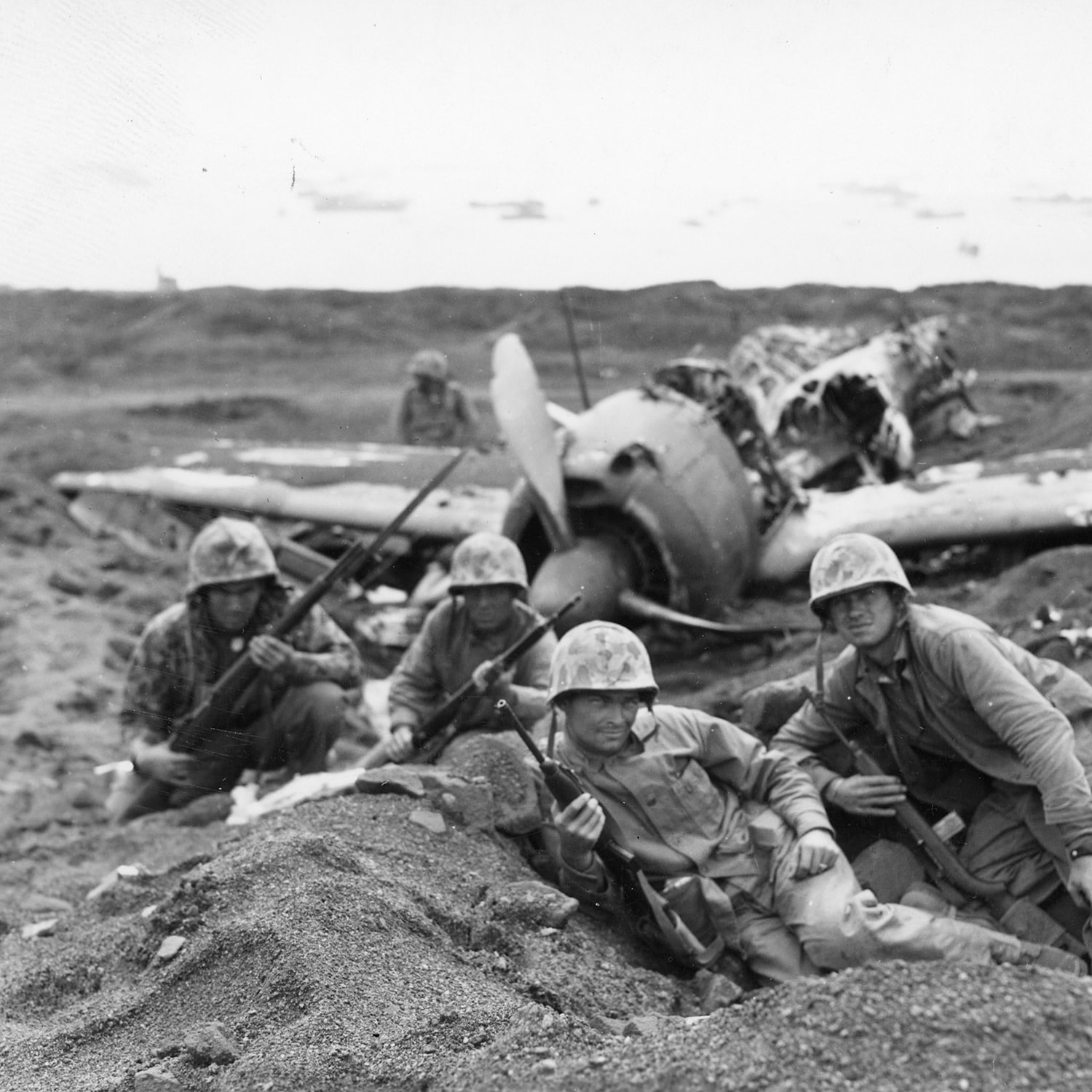
Image via World History Encyclopedia
Seventy-Five Frames That Still Explain the Pacific War
A new gallery of 75 images from the Pacific War offers something textbooks often struggle to deliver: the war’s scale, texture, and human cost in a single glance. Spanning the years after the 1941 attack on Pearl Harbor, the collection follows the conflict across island chains, airfields, beaches, ships, and makeshift hospitals. The photos don’t just illustrate events; they show how geography itself became a combatant, with distance, weather, and jungle shaping strategy as much as generals did.
Seen together, these images also echo an older American pattern: wars that begin with a shock, then stretch into long campaigns defined by logistics and industrial power. The Pacific theater demanded an assembly-line approach to victory: carriers, planes, landing craft, and supply routes stitched across the ocean. But the camera keeps interrupting the big strategic story with smaller truths: the exhaustion in faces, the improvisation of daily survival, the fragile line between ordinary life and catastrophe.
There’s a quiet civic lesson here, too. Photographs are not neutral, and wartime images have always balanced documentation with persuasion. Yet even with that caution, a curated visual record like this helps us remember that “the Pacific War” wasn’t a single narrative arc. It was thousands of scattered, brutal encounters that added up to a world-changing outcome—and to an American postwar presence in Asia and the Pacific that still shapes today’s alliances and tensions.
Source: World History Encyclopedia
Read the full story at World History Encyclopedia →

Image via HistoryExtra
Meet Prester John, the Medieval Superpower That Lived Only in Europe’s Imagination
Europe spent centuries believing in an impossibly powerful Christian ruler somewhere “in the East”—a king with vast wealth, miraculous resources, and an empire that could become a perfect ally against Islam. The twist, as HistoryExtra lays out, is that this monarch never existed. The figure is often called Prester John, and his supposed realm drifted across the map as generations tried to pin him down: first somewhere in Asia, later in Africa, and frequently in the realm of whatever was just beyond the horizon of reliable knowledge.
What makes the story feel modern is not the medieval geography lesson, but the mechanics of belief. The legend flourished because it met real needs: it offered hope, strategic fantasy, and a comforting sense that history had hidden reinforcements waiting offstage. It even influenced major decision-makers—including a pope—while nudging European exploration and diplomacy toward places they barely understood. In other words, it wasn’t harmless folklore. It was a shared assumption that could steer real budgets, real missions, and real risks.
The tale is a reminder that “not true” and “not powerful” aren’t the same thing. Myths can be engines. They compress complicated realities into a story people can act on. Medieval Europeans didn’t just tell the story of Prester John; they used it to make sense of their world and to justify reaching into someone else’s. The historical aftertaste is familiar: whenever a society badly wants a solution, it becomes tempting to invent one—then chase it as if it were waiting patiently on the map.
Source: HistoryExtra
Read the full story at HistoryExtra →
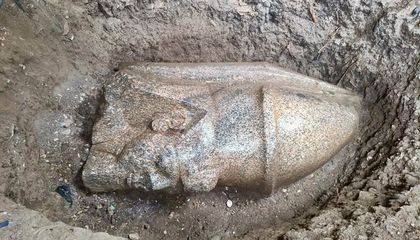
Image via Smithsonian Magazine
A Pink Stone in a Field, and Ramses II Rises Again
In Egypt, a farmer noticed something unusual—pink stone emerging from the ground—and did what you hope anyone would do: he called the authorities. Archaeologists who investigated found the remains of two colossal statues of Ramses II buried beneath the property, including a recovered head that may have belonged to a figure nearly 28 feet tall. Smithsonian Magazine reports that the discovery could indicate a major building site commissioned by the pharaoh, the kind of monumental project that turned rulers into permanent fixtures of the landscape.
Ramses II is one of those names that survives because he wanted it to. His reign was defined not only by military campaigns and diplomacy, but by an obsession with visibility: temples, statues, inscriptions—public memory carved into stone at a scale meant to outlast politics. And yet the irony of archaeology is that even the loudest self-promotion can go quiet for millennia. A colossus built to dominate a skyline can end up hidden under soil, waiting for chance and careful excavation.
There’s also a subtle modern story running underneath this one: land use, development, and heritage colliding in real time. Ancient sites aren’t only found in deserts and museum cases; they’re under farms, neighborhoods, and roads. Each discovery forces a negotiation between daily life and deep time—between what a community needs now and what the past still holds. A single stone in a field can reopen a chapter of state power, labor, religion, and art that once shaped an entire civilization.
Source: Smithsonian Magazine
Read the full story at Smithsonian Magazine →
That’s today’s Time Capsule. If you only have a few minutes, linger with one photo, one myth, or one stone—history has a way of speaking clearly when we let it slow us down.
— Time Capsule Editorial


No comments:
Post a Comment